
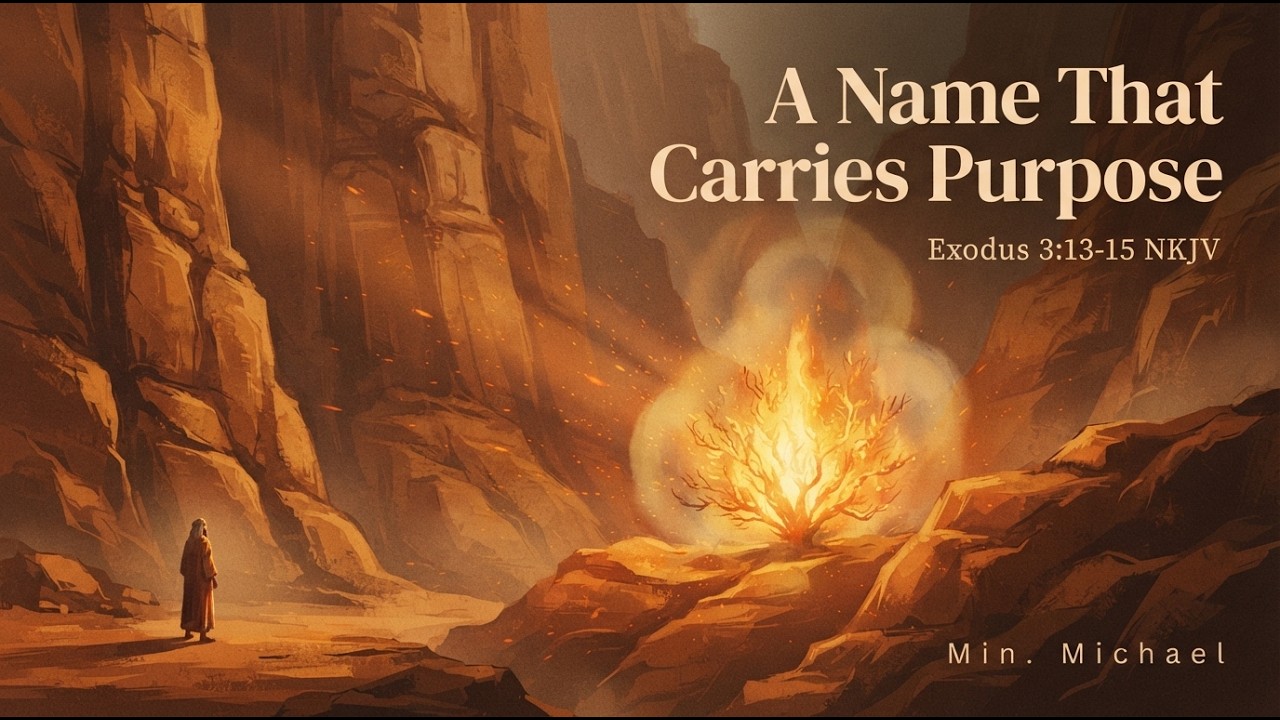
A Name That Carries Purpose
Have you ever stopped to think about the meaning of your name? It’s more than just a sound we answer to; in many cultures, and certainly throughout the Bible, a name carries deep significance. It can reveal character, hint at destiny, or even reflect the circumstances of one's birth. Today, we're going to explore how names aren't just labels, but vessels of identity, purpose, and even divine authority.
Key Scriptures
- Exodus 3:13-15
- 1 Samuel 3:4
- 1 Samuel 3:9-10
- Matthew 1:21
- Philippians 2:9-10
- Luke 1:12-14
- Genesis 16:11
- Genesis 17
- 1 Chronicles 22:9
- Genesis 17:5-7
- Genesis 35:10-11
- 2 Corinthians 6:4
- 1 Chronicles 4:9-10
- 1 Peter 2:9
The Profound Weight of a Name
A name is far more than a simple identifier; it's the very essence of a person's being. It carries identity, purpose, and authority. Think about the names we know – perhaps your own, or those of loved ones. Many names have beautiful meanings, like "God's comfort," "God among us," "wealth," or "God is gracious." In the Bible, names were often given based on a person's character, their influence, or even the present situation they faced. They could even reveal a person's origin. This profound truth is perhaps best illustrated when Moses encountered God at the burning bush. Moses, tasked with leading the Israelites out of slavery, knew of God through his forefathers, Abraham, Isaac, and Jacob. But he needed more than just a historical reference; he needed a name that carried authority for his mission. In Exodus 3:13-15, Moses asks God, "Indeed, when I come to the children of Israel and say to them, 'The God of your fathers has sent me to you,' and they say to me, 'What is His name?' What shall I say to them?" God's response is monumental: "I AM WHO I AM." And He instructed Moses to tell the Israelites, "I AM has sent me to you." He further declared, "Thus you shall say to the children of Israel: 'The LORD God of your fathers, the God of Abraham, the God of Isaac, and the God of Jacob, has sent me to you. This is My name forever, and this is My memorial to all generations.'" Our Heavenly Father has a name – He is Yahweh, the great I AM, the Most High God. And He invites us to call Him by His name.
Names Woven into Divine Destiny
It's fascinating how often names in Scripture are intricately tied to a person's mission or destiny. Consider Moses himself. His name means "drawn out of the water." Who gave him that name? Not his mother, not God, but Pharaoh's daughter, who literally drew him from the Nile River. And what was one of the greatest miracles God performed through Moses? The splitting of the Red Sea – a dramatic act of being "drawn out of the water" on a grand scale, leading an entire nation to freedom. His name was literally tied to his greatest work. Then there's Samuel, whose mother, Hannah, dedicated him to the Lord's service. While still a boy, Samuel heard God calling him by name. 1 Samuel 3:4 tells us, "the LORD called Samuel; and he answered, 'Here I am!'" It took Eli, the priest, to realize that God Himself was speaking to the boy. Eli then instructed Samuel, "Go lie down; and it shall be, if He calls you, that you must say, 'Speak, LORD, for Your servant hears.'" (1 Samuel 3:9-10). God knows you by name too. He calls out to you, and your name is important to Him. Beyond those called into service, many significant figures in the Bible had their names announced even before their birth. This includes Jesus Christ Himself (Matthew 1:21, Philippians 2:9-10), John the Baptist (Luke 1:12-14), Ishmael (Genesis 16:11), Isaac (Genesis 17), and King Solomon (1 Chronicles 22:9). These pre-ordained names underscore a divine plan already in motion.
When God Renames Your Destiny
Perhaps even more powerfully, God sometimes changes a person's name, signifying a complete transformation of their identity and destiny. Think of Abram and Sarai. God changed Abram's name to Abraham, meaning "father of many nations," and Sarai's to Sarah, "mother of nations." In Genesis 17:5-7, God declares, "No longer shall your name be called Abram, but your name shall be Abraham; for I have made you a father of many nations... and kings shall come from you." This wasn't just a new label; it was a new covenant, a new identity, and a new purpose established by God Himself. Then there's Jacob, whose name meant "supplanter" or "deceiver." He lived up to his name, famously tricking his brother Esau out of his birthright. But after wrestling with God, his name was changed. Genesis 35:10-11 records, "And God said to him, 'Your name is Jacob; your name shall not be called Jacob anymore, but Israel shall be your name.' So He called his name Israel... 'A nation and a company of nations shall proceed from you, and kings shall come from your body.'" Israel means "one who struggles with God" or "God contends." This name change marked a pivotal moment, shifting his identity from deceiver to the patriarch through whom the twelve tribes of Israel would come. God's plan for Jacob's destiny was realized, not through his own schemes, but through God's renaming and re-establishing of his purpose. These name changes served to bring about God's divine plan and reassure these individuals that His purposes would be realized through them.
Guarding the Legacy of Your Name
If our names carry such weight and purpose, how do we protect them in our daily lives? The Apostle Paul reminds us in 2 Corinthians 6:4, "But in all things we commend ourselves as ministers of God: in much patience, in tribulations, in needs, in distresses..." Guarding your name means holding it in high esteem, with great integrity. Your actions, your words, how you move, and how you interact with others ultimately demonstrate your reputation. The company you keep, your associations with friends and family, and your conduct at work or school all carry significant weight. People will judge your character not just by the name you bear, but by the life you live. Even if your name has a beautiful meaning, your behavior is what truly defines your reputation.
From Pain to Purpose: The Story of Jabez
Sometimes, a name can carry a heavy burden. Consider Jabez, whose mother named him "Jabez," saying, "Because I bore him in pain" (1 Chronicles 4:9). His name literally meant "one who was born out of pain." But Jabez refused to let his name define his destiny. He cried out to the God of Israel, "Oh, that You would bless me indeed, and enlarge my territory, that Your hand would be with me, and that You would keep me from evil, that I may not cause pain!" (1 Chronicles 4:10). And God granted what he requested! God didn't change Jabez's name, but He changed his status. He gave Jabez strength where there was weakness and honor where there had been dishonor. Jabez's prayer transformed his life, proving that even a name born of sorrow can be redeemed by God's grace and power.
Your Royal Identity in Christ
Ultimately, for us as believers, our deepest identity is found in Christ. 1 Peter 2:9 proclaims, "But you are a chosen generation, a royal priesthood, a holy nation, His own special people, that you may proclaim the praises of Him who called you out of darkness into His marvelous light." God's anointing is upon the name of every believer. Your name carries status and authority because you are His. Regardless of what people have called you, or even what you might have called yourself in moments of hardship, loneliness, or strife, one thing remains true: God has not forgotten you. He knows you by name. He knows your true identity, your divine purpose, and the authority He has placed upon your life.
Discussion Questions
- What does your name mean, if you know? How does that meaning resonate or contrast with your life experience?
- Can you recall a time when someone's reputation (their "name") significantly influenced your perception of them?
- Moses needed God's name, "I AM," to fulfill his mission. How does knowing God's character (as revealed in His name) empower you in your own life?
- God changed the names of Abram and Jacob to reflect a new identity and purpose. In what ways has God given you a "new name" or a new identity through your relationship with Him?
- The sermon emphasizes guarding our name and reputation. What practical steps can you take this week to ensure your actions reflect integrity and honor?
- Jabez prayed for God to change his status, even though his name meant "pain." Is there an area in your life where you need to pray for God to change your status or bring honor where there has been dishonor?
- 1 Peter 2:9 describes believers as a "royal priesthood" and "holy nation." How does understanding this identity impact how you view yourself and your purpose?
Application
This week, take time to reflect on the meaning of your name, both the one given to you by your parents and the new identity you have in Christ. Consciously choose to live in a way that honors your name and, more importantly, the Name of the God who knows you intimately and has called you to a divine purpose.
Prayer Points
- Pray for a deeper understanding of the identity and purpose God has placed upon your life and name.
- Ask God for strength and wisdom to guard your reputation and live with integrity in all your interactions.
- Pray for God to transform any areas of pain or dishonor in your life into strength and honor, just as He did for Jabez.